Reset Password

Retreat Venues Tanzania

You’re drowning in browser tabs trying to find the perfect retreat venue Tanzania has to offer.

Our platform includes dozens of venues there, and we’re about to save you weeks of research.

Price on Request
Guests:24
Extra Guests:4
12
12
$ 600 /night
For Sale
$ 35 /night
Guests:24
Extra Guests:4
8
9

Tanzania doesn’t do understated. The country holds some of the most recognizable landscapes on earth — the Serengeti, the Ngorongoro Crater, Kilimanjaro, Zanzibar — and that familiarity carries weight when you’re selling a retreat to prospective participants. The destination does part of your marketing for you.

But beneath the visual appeal, Tanzania offers retreat organizers something more substantive: a genuine spectrum of environments, from tented bush camps to beachfront eco-lodges, that can hold very different kinds of programmes. The challenge isn’t finding somewhere extraordinary. It’s knowing which part of the country fits the retreat you’re trying to build.

Why Tanzania Draws Retreat Organizers

The pull of East Africa for retreat work has grown considerably over the past decade. Tanzania sits at the centre of that shift, drawing facilitators and programme designers who want something their European or Southeast Asian counterparts simply can’t offer: genuine wildness alongside world-class hospitality.

For participants, the destination itself becomes part of the transformation. Arriving into Kilimanjaro International Airport after crossing the African continent, or landing in Zanzibar to the scent of spices and salt air — those experiences prime people for depth in a way that more familiar environments rarely do. For wellness retreat organizers especially, that psychological priming is an underused asset.

Logistically, Tanzania is more accessible than many organizers assume. Kilimanjaro International Airport near Arusha serves as the main entry point for northern circuit programmes, with connections through Nairobi, Addis Ababa, Doha, and Amsterdam from most major European and North American hubs. Zanzibar has its own international airport, and a short internal flight of around one hour connects the two entry points — making multi-location programmes genuinely practical.

The Main Retreat Zones: What Each Delivers

Tanzania is large. The four primary zones for retreat work each operate differently, and matching your programme to the right geography is the single most important planning decision you’ll make.

Zanzibar: The Retreat Venue Hub

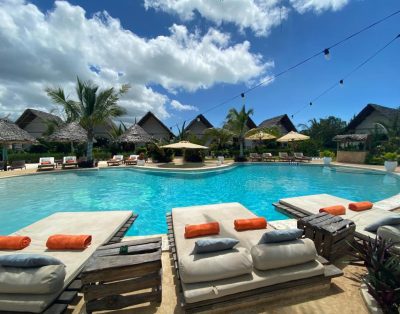
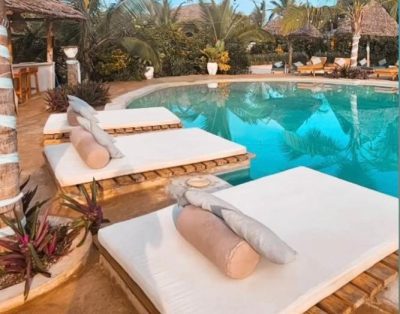
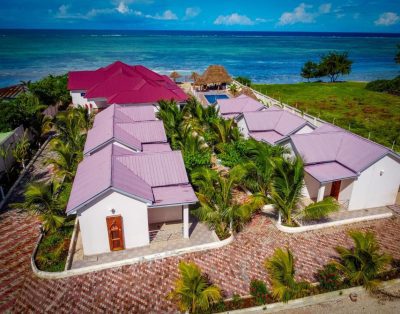
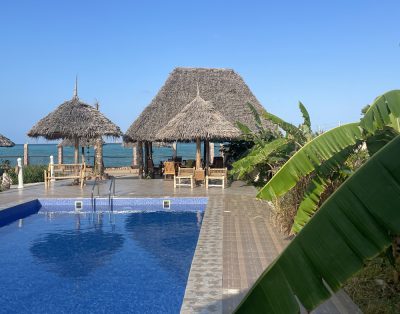
Of all the retreat venues in Tanzania, Zanzibar absorbs the largest share of yoga and wellness programmes — and for good reason. The archipelago offers picturesque fishing villages, breathtaking beaches, and a pace of life that’s genuinely hard to resist, and the island’s hospitality infrastructure has developed specifically to serve retreat groups rather than mass tourism.

The north of the island — around Nungwi and Kendwa — tends to attract yoga retreat organizers looking for dedicated practice space with ocean views. Sun Salute Africa, for instance, sits on the northern tip of the island overlooking the ocean, with two yoga spaces designed specifically for westward sunset sightings. That level of intentionality in venue design — where the architecture serves the practice, not just the aesthetics — is what separates purpose-built retreat spaces from repurposed hotel rooms.

The east coast, around Paje and Bwejuu, is quieter and less developed. It attracts organizers who want participants further from the tourist infrastructure of the north — longer stretches of beach, lower ambient noise, a stronger sense of remoteness. The trade-off is slightly longer transfer times and fewer venue options at scale.

For wellness retreat programming specifically, Zanzibar’s range is notable. Zuri Zanzibar’s wellbeing team includes yoga and meditation teachers, nutrition coaches, Reiki masters, conscious dance tutors, and chakra healing therapists — a depth of facilitation partnership that more specialist organizers can plug directly into their programme. Stone Town, meanwhile, offers cultural excursion options that add a historical and anthropological dimension to any retreat itinerary.

One practical note on visas: for European Union nationals entering Tanzania via Zanzibar, a visa is issued on arrival at the airport for US$50. Groups transiting through Dar es Salaam should apply in advance. Organizers are advised to confirm current requirements for each nationality represented in their group well ahead of travel.

The Northern Circuit: Safari and Altitude

The northern circuit — Arusha, Tarangire, Lake Manyara, the Serengeti, Ngorongoro — is Tanzania’s safari heartland, and it’s increasingly being used as the framework for a different kind of retreat: one where the wilderness itself is the primary teacher.

Yoga retreat organizers have pioneered this format effectively. Above Safaris, for example, structures programmes around the northern circuit national parks, opening and closing each day with yoga and meditation sessions against the backdrop of the savannah. The combination of daily practice and genuine wildlife immersion produces something qualitatively different from a studio-based retreat — participants are constantly confronted with scale, with silence, and with ecosystems that have no interest in their productivity metrics.

Tented camps and safari lodges in this region vary enormously. Some are genuine luxury properties with private plunge pools and fine dining. Others are more authentically rustic — open-sided mess tents, bucket showers, and skies so clear the Milky Way functions as a nightlight. Organizers should be precise about what their participants can tolerate, and what the programme actually requires. A meditation retreat needs silence and stillness; a tented camp in the Serengeti during the Great Migration delivers both, but it also delivers dust, heat, and the occasional sound of lions after dark.

The Kilimanjaro Region

Retreat venues near Kilimanjaro operate in a different register entirely. The mountain dominates the landscape and the psychological atmosphere around it. Moshi, the nearest town, has developed a solid support infrastructure for international visitors — guesthouses, eco-lodges, and properties capable of hosting groups before and after the mountain.

Kilimanjaro-based programmes tend to combine physical challenge with inner work. A typical format might include several days of acclimatisation yoga and meditation in Moshi, followed by a climb attempt, before a connecting flight to Zanzibar for recovery and beach-based practice. That arc — exertion followed by restoration — creates a natural narrative for a retreat programme and tends to produce strong group cohesion.

For corporate retreat organizers specifically, the Kilimanjaro context offers something distinct: a shared physical challenge with genuine psychological stakes. Reaching a high-altitude base camp as a team, or even summit day for more physically capable groups, produces the kind of trust and mutual accountability that ropes courses and trust falls have been failing to replicate for decades.

Arusha and the Gateway Properties

Arusha tends to be a transit point rather than a destination in its own right, but it shouldn’t be dismissed entirely. Several properties around the town offer genuine retreat infrastructure — including coffee estate lodges set on working plantations, with mountain views and the kind of agricultural tranquility that suits slower-paced, contemplative programmes. Groups who want safari access without the intensity of deep-bush camps often base themselves here and day-trip into Arusha National Park.

What to Evaluate in Any Tanzanian Venue

Tanzania’s venue landscape is diverse, and standards vary considerably more than in more established retreat markets. These are the specific questions worth pressing on during any venue conversation.

Water and Power Reliability

Off-grid and eco-lodge properties — common in the retreat sector here — often run on solar power with generator backup. That setup works well for most retreat formats, but it can create tension on corporate retreat programmes where participants need reliable charging, consistent lighting for evening sessions, or video call capability. Ask directly about daily power hours, internet bandwidth under load, and whether satellite connectivity is available as a fallback.

Sleeping Configuration and Group Privacy

Many Tanzanian lodge properties are designed for couples or individual travellers on fly-in safari packages. Group configurations — particularly shared accommodation or dormitory-style rooms — aren’t always available. Equally, full buyout options exist at some properties and are worth pursuing: shared venues where unrelated guests are moving through communal spaces can fragment the group container that retreat programmes depend on.

Catering and Dietary Range

Plant-based and allergen-aware menus are more readily accommodated in Zanzibar’s retreat-specific properties than in safari lodge contexts, where menus have traditionally been built around meat-heavy East African and European cuisine. Ecolodge properties in Zanzibar typically offer healthy vegetarian menus as standard, but this is less consistently true on the mainland. For wellness retreat organizers where food is a core programme element — cleanses, Ayurvedic menus, raw food protocols — Zanzibar venues are generally better resourced than their northern circuit counterparts.

Seasonal Timing

Tanzania has two distinct rainy seasons. The long rains run from mid-March through late May; the short rains fall in November. Outside those windows, the climate is generally favourable across the country. However, the timing affects more than weather: East Africa is excellent to visit year-round, but heavy rains from mid-March to late May affect both access routes and the conditions in national parks. For organizers planning outdoor-heavy programmes, the dry season from June through October is the most reliable window — and also the most popular, so venues should be secured well in advance.

Structuring a Multi-Location Tanzanian Retreat

Tanzania’s geography lends itself to a format that few other destinations can match: combining fundamentally different environments within a single retreat arc. The most effective version typically moves participants from activity and immersion to rest and integration.

A logical sequence might open with two to three days on the northern safari circuit — game drives, morning practice, campfire evenings — before a short internal flight to Zanzibar for the closing phase of beach, ocean swimming, and deeper restorative work. Internal flights between Arusha and Zanzibar take approximately one hour, making the transition logistically smooth even for groups less experienced with African travel.

That movement between landscapes mirrors the internal arc of many retreat formats — challenge, then rest; wildness, then stillness — and it gives participants a genuinely two-part story to carry home.