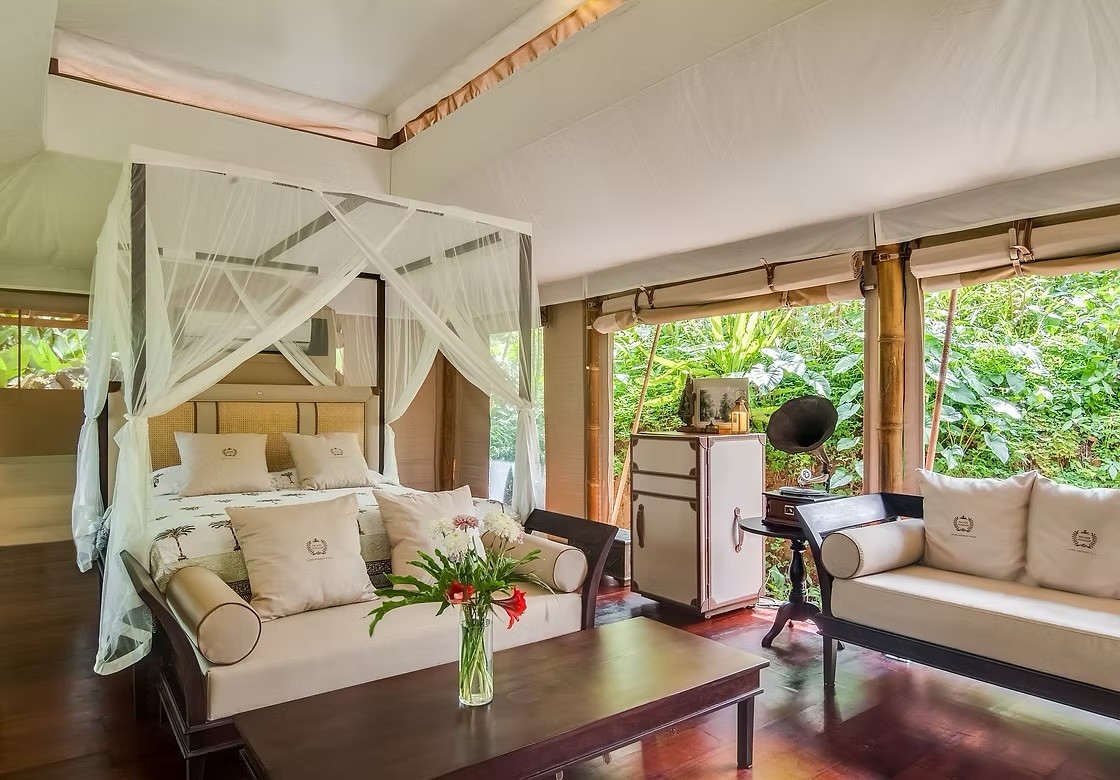
Sebatu Sanctuary, Eco-Resort for 12 Guests in Ubud, Bali
Description
Sebatu Sanctuary, Eco-Resort for 12 Guests in Ubud, Bali
Getting to Sebatu Sanctuary
Every international group will arrive through I Gusti Ngurah Rai International Airport (DPS) at Denpasar, Bali’s only commercial airport. It is well connected to Singapore, Kuala Lumpur, Bangkok, Doha, Dubai, Sydney, Melbourne, Perth and the major Indonesian hubs, so most guests reach it with one connection.
The drive north is the part organisers underestimate. There is no motorway between the airport and the Ubud area. Typical airport-to-Ubud journeys take 75 to 120 minutes for the 38 km. Sebatu sits a further 12 to 15 km north of Ubud centre, normally 30 to 40 minutes on the winding Tegallalang road. A realistic planning figure is therefore 90 minutes to two hours for an early morning or late evening arrival, and two to two and a half hours if your group lands between 16:00 and 19:00, when commuter traffic out of Denpasar is heaviest.
Practical advice for a group booking:
- Arrange transfers in advance rather than relying on ride-hailing apps. Coverage around Ubud and Tegallalang is unreliable, and local transport associations restrict app pick-ups in some villages.
- Bali’s roads suit vehicles of six to eight seats rather than coaches. A group of 12 with luggage will usually travel in two or three vehicles.
- If your participants arrive on different flights across a day, batch them into two transfer windows rather than sending a vehicle per arrival.
- Ask guests to build in a buffer night if their itinerary is tight. Long-haul arrivals into Bali are often after midnight, and a 2 a.m. check-in on the first retreat day rarely produces a good opening circle.
When to Hold Your Retreat at Sebatu Sanctuary
Bali has a tropical monsoon climate with a clear dry season and a clear wet season. Because Sebatu and the wider Tegallalang area sit at roughly 600 metres above sea level, daytime temperatures are a few degrees cooler than at the coast, and nights are noticeably fresher.
Dry season, May to September. Daytime highs of 29 to 30C, nights around 22 to 23C, low humidity by Balinese standards and long sunny spells. August is the driest month of the year with roughly 53 mm of rain, and July, August and September average only one to three rainy days each. This is the strongest window for outdoor yoga, hikes and volcano treks, and it is also the busiest and priciest period across Bali. Book nine to twelve months ahead for July and August.
Shoulder months, April and October. Highs of 31C, warm nights, and rainfall in the 117 to 173 mm range. Showers tend to be short and afternoon-based rather than all-day. These months usually give the best balance of weather, availability and price, and April is often the single best value month for a retreat.
Transition, November. Around 187 mm of rain over about 8 days, still with plenty of sun. Workable if your programme is largely indoors or under cover.
Wet season, December to March. Highs of 30 to 31C, nights around 24C, and heavy rainfall: roughly 258 mm in December, 328 mm in January, 261 mm in February and 225 mm in March, with 16 to 20 rainy days a month at the peak. Rain typically comes in intense bursts rather than constant drizzle, but paths turn muddy, humidity is high and volcano treks are frequently cancelled. Prices are lower and the landscape is at its greenest.
One date to check every year: Nyepi, the Balinese day of silence, which moves annually. For 24 hours the whole island shuts down, the airport closes completely, no vehicles move, lights are dimmed and nobody leaves their accommodation. Some retreat groups deliberately programme around it as a silent day. Others get caught out. Confirm the date before you publish your retreat dates.
The Setting: Sebatu and the Tegallalang Uplands
Sebatu is a working Balinese village rather than a tourist strip. Daily life runs on temple calendars and the subak irrigation cycle, the communal water management system that has organised rice planting here for centuries, and residents still practise wood carving, stone carving and textile work. The village is known for its sacred springs, used locally for purification and prayer.
For a retreat group this matters in three concrete ways. First, noise. The upland Tegallalang area has none of the scooter traffic, bar music or construction that now surrounds central Ubud, so early morning sessions and evening sharing circles are not competing with the outside world. Second, temperature. At around 600 metres, daytime conditions of roughly 24 to 28C make midday movement practices comfortable and nights cool enough to sleep without heavy air conditioning. Third, containment. Guests are 30 to 40 minutes from Ubud’s shops and cafes, which is far enough that people stay on site and inside the programme, and close enough that a free afternoon in town is still an easy option.
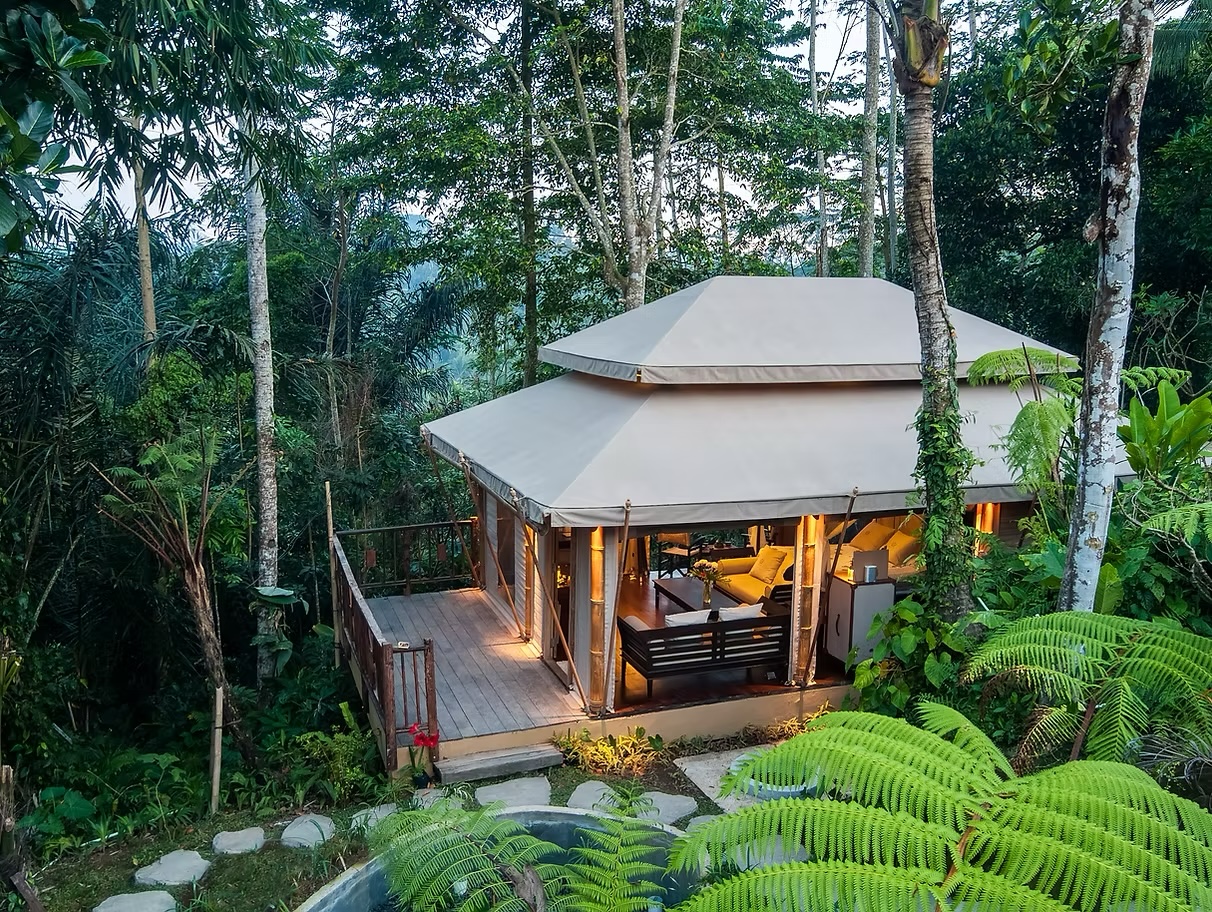
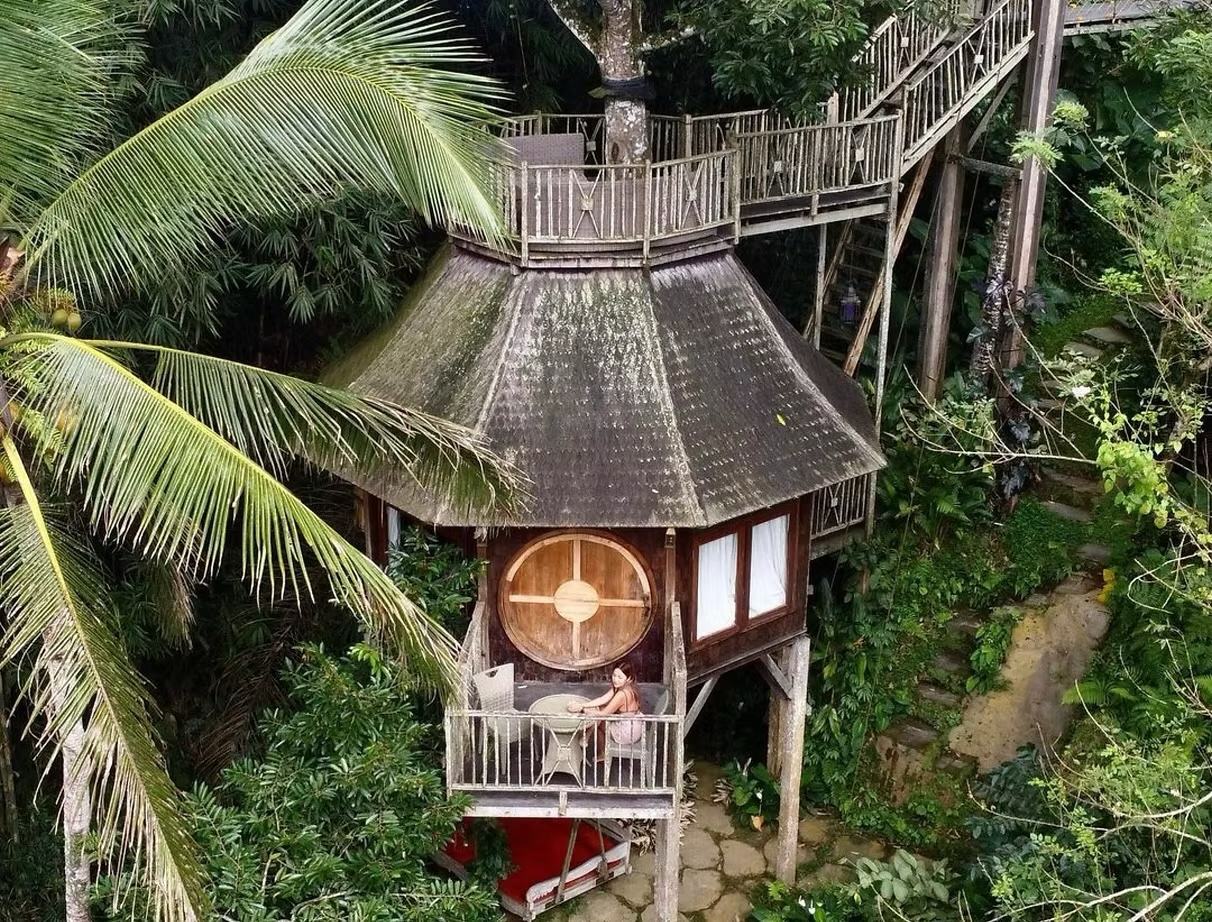
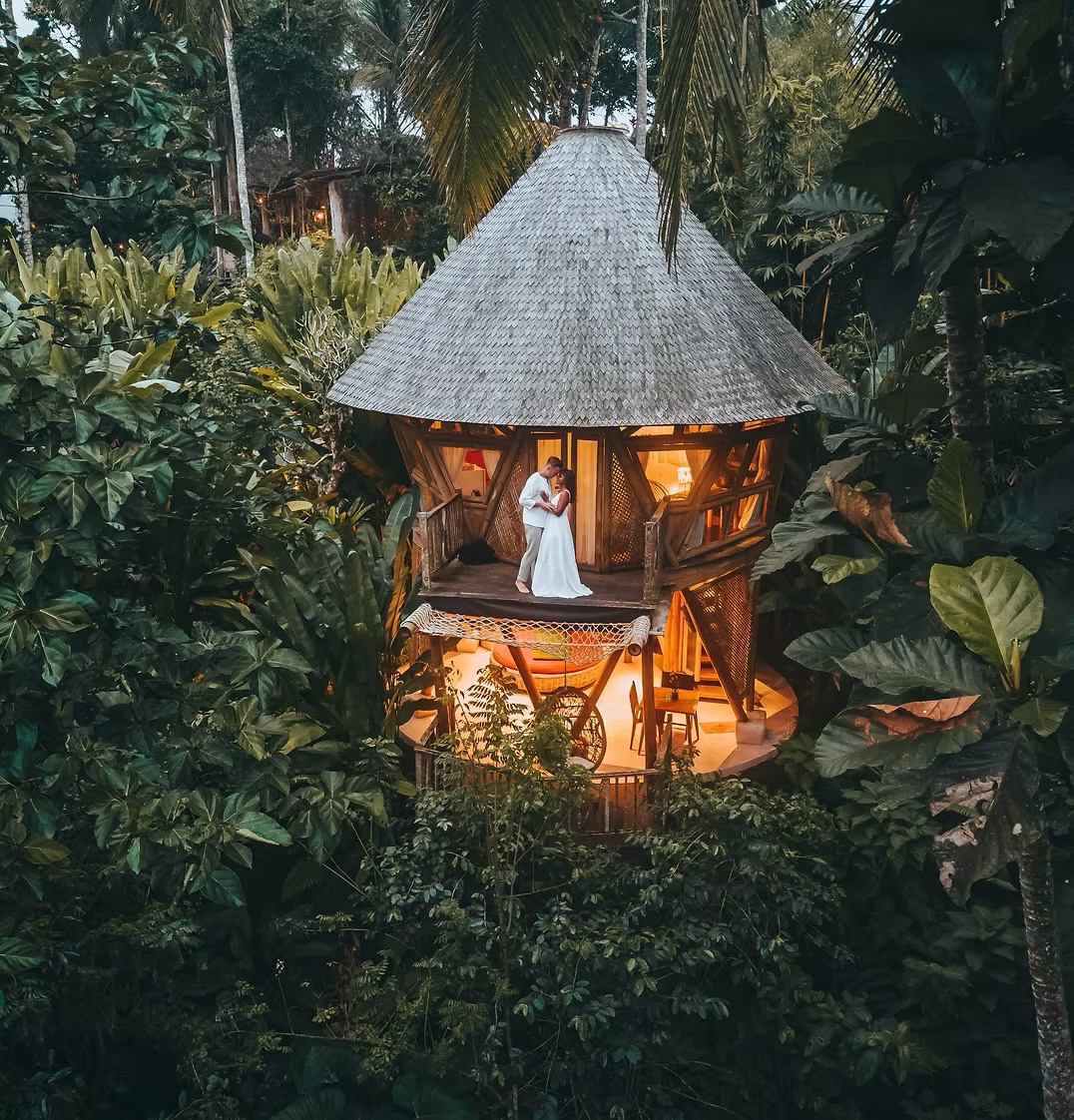
The trade-off is honest and worth stating to participants in advance: this is a rural, low-light, jungle-edge setting with insects, occasional monkeys and Balinese village sounds including early morning roosters and periodic temple ceremonies.
What Your Group Can Do On Site and Nearby
On the property
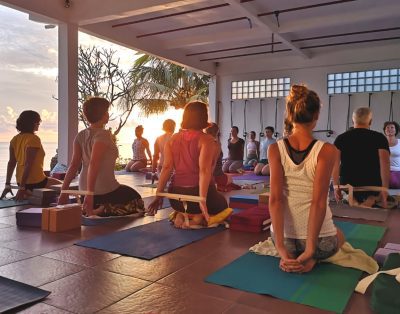
- Yoga and movement sessions in the dedicated yoga space, plus an outdoor terrace and a sound system for guided practices
- Swimming in the chemical-free natural pool, which is filtered biologically rather than chlorinated
- Meals at the Evicurious restaurant on site, built around Southeast Asian organic cooking with vegan, vegetarian and gluten-free options
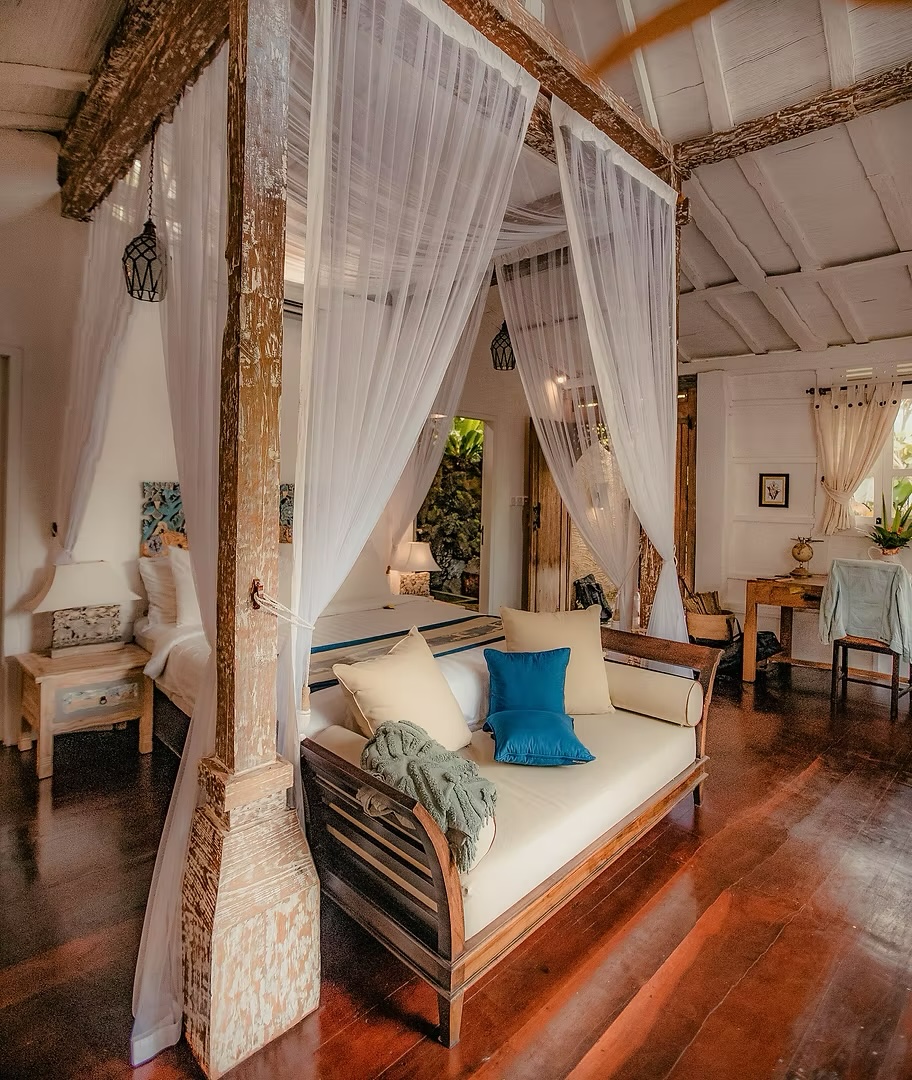
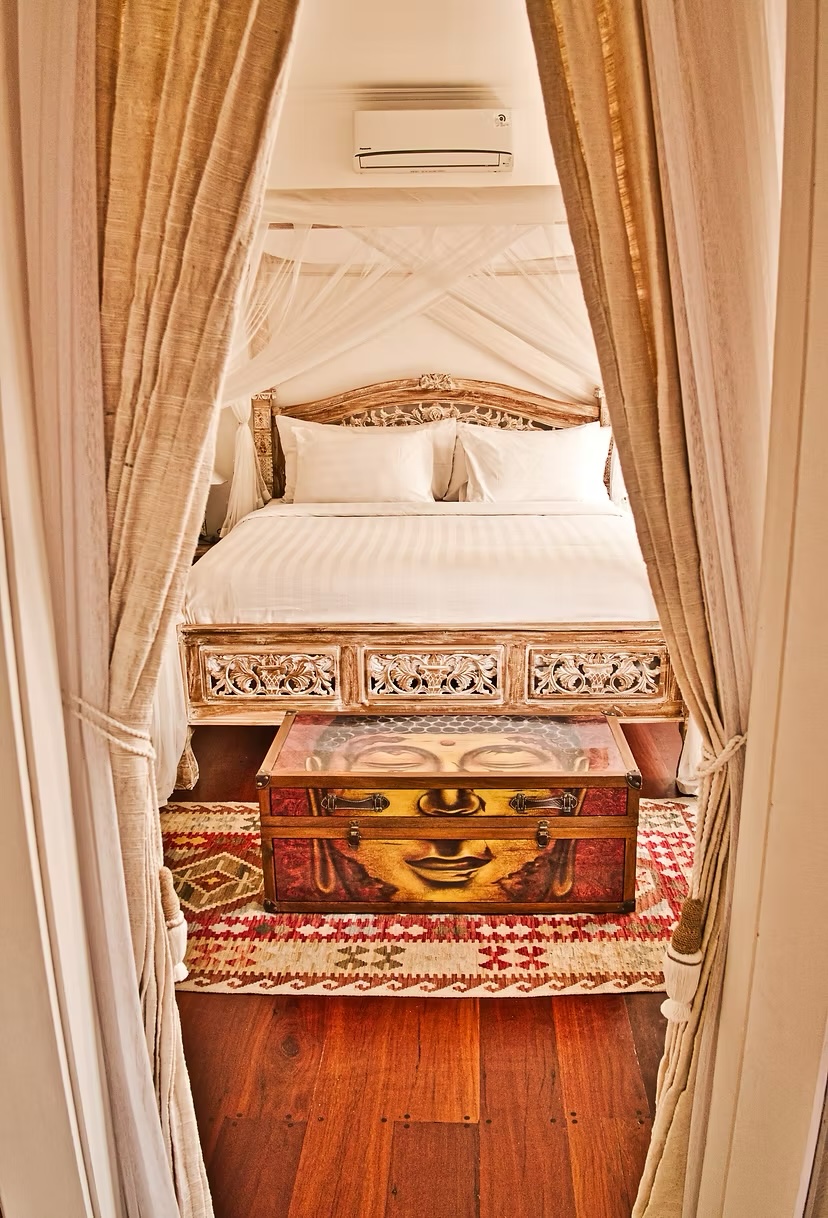
- Spa treatments, quiet reading time in the individual villas, and bike hire for the surrounding lanes
Within a short drive
- Pura Gunung Kawi Sebatu, a spring-fed water temple with koi ponds in the village itself, far quieter than Bali’s headline temples
- The Tegallalang rice terraces, roughly 15 to 20 minutes south, best visited before 09:00 to avoid coach traffic
- Coffee and cacao plantations along the Tegallalang road, most offering free tastings
- Waterfalls in the Petanu river valley, reachable in well under an hour
Half day trips
- Tirta Empul and Gunung Kawi Tampaksiring, around 15 to 20 minutes away, for a guided water purification ceremony followed by the rock-cut royal tombs
- Ubud centre, 30 to 40 minutes away, for the art market, the Campuhan Ridge Walk, the Monkey Forest and the Blanco and Puri Lukisan museums
- A Mount Batur sunrise trek in Kintamani to the north, which means a pick-up at roughly 02:00 and a return by mid-morning
- Silversmithing in Celuk or wood carving with Sebatu craftspeople, if you want a hands-on cultural session inside the retreat programme
Who Sebatu Sanctuary Works Best For
It works well for
- Retreats of 8 to 12 participants where every guest has their own villa and privacy between sessions matters
- Yoga, breathwork, women’s circles, coaching intensives and writing retreats that need one good practice space rather than several
- Facilitators who want an eco-conscious, low-impact venue and can make sustainability part of the story they tell participants
- Groups that value quiet, cool nights and a genuine village setting over resort polish and nightlife
- Programmes with a strong cultural component, given the temples, springs and craft traditions within minutes of the gate
It works less well for
- Groups over 12. If you need 16, 20 or 30 beds, this is not the venue.
- Retreats needing several simultaneous breakout rooms, a conference set-up or reliable high-bandwidth video work
- Guests with limited mobility. Bali hillside properties typically involve steps, uneven paths and separate structures.
- Anyone expecting to walk to restaurants, shops or nightlife. Sebatu is rural and evenings out require a driver.
- December to March programmes that depend on outdoor sessions or volcano treks
- Very tight budgets that cannot absorb two hours of private transfer at each end of the retreat
Frequently Asked Questions
How many people can Sebatu Sanctuary sleep? The venue takes up to 12 guests across its individual villas. Confirm the exact villa mix and bed configuration with the owner.
Can we book the whole property exclusively? Exclusive use is the normal expectation for a retreat of this size. Ask the owner directly for whole-property terms, the minimum night stay attached to exclusivity and whether the restaurant remains open to outside diners during your booking.
Which airport should participants fly into? I Gusti Ngurah Rai International Airport (DPS) at Denpasar, Bali’s only commercial airport. Allow 90 minutes to two and a half hours for the transfer depending on arrival time.
When is the best time of year to run a retreat here? May to September for the driest, sunniest conditions, with August the driest month. April and October offer a very good balance of weather and price. December to March is the wet season with 16 to 20 rainy days a month.
Is there a dedicated yoga space? The listing includes a yoga space along with an outdoor terrace and a sound system. Confirm its dimensions, whether it is covered, how many mats fit comfortably and whether mats and props are provided.
Are meals included and can dietary needs be met? The property has its own restaurant serving Southeast Asian organic cuisine with vegan, vegetarian and gluten-free options. Full board packages and per-person meal rates should be agreed with the owner before you publish your retreat pricing.