A password will be e-mailed to you
You’re drowning in browser tabs trying to find the perfect retreat venue Peru has to offer.
Our platform includes dozens of venues there, and we’re about to save you weeks of research.
Peru does something to people. It’s hard to describe precisely, but most participants who spend real time here — not a rushed Machu Picchu day trip, but several days embedded in the landscape and the culture — come back changed in ways they didn’t anticipate. The altitude has something to do with it. So does the scale of the Andes, the depth of the Quechua and Aymara civilizations that still pulse through daily life, and the sheer ecological intensity of the Amazon basin just a few hours east.
Let’s begin with honesty. Peru is not an easy destination. Altitude sickness (soroche) affects a meaningful percentage of visitors to Cusco, the Sacred Valley, and the altiplano around Lake Titicaca. The symptoms — headache, fatigue, nausea, shortness of breath — can range from mildly inconvenient to genuinely disruptive. A retreat participant who spends their first two days horizontal is not having the experience you designed.
This is not a reason to avoid Peru. It is a reason to build acclimatization into the program structure from the start, to communicate honestly with participants about altitude before they arrive, and to choose venues that have experience managing these dynamics for group arrivals.
Beyond altitude, travel to most retreat destinations involves multiple legs — an international flight to Lima, then a domestic connection to Cusco or Puerto Maldonado, then ground transfer. Participants arrive tired. Arrival day programming should account for this rather than fight against it.
For groups willing to engage with these conditions thoughtfully, what Peru offers in return is simply without parallel in the retreat world.
The Sacred Valley of the Incas — the Urubamba river valley stretching between Pisac and Ollantaytambo — is where the majority of Peru’s serious retreat infrastructure is concentrated. And for reasons that go beyond scenery.
The valley sits at around 2,800 meters, roughly 700 meters lower than Cusco city. This makes it significantly easier for newly arrived participants to acclimatize. The quality of light at this altitude is extraordinary — sharp, clear, and somehow amplified by the surrounding peaks. The Inca terraces, still used for agriculture after five centuries, create a visual rhythm of human relationship with landscape that is quietly profound.
Venues in the Sacred Valley range from intimate ecolodges built into hillside positions to more substantial retreat centers with purpose-designed ceremony spaces, sweat lodge (temazcal) structures, and multi-day program infrastructure. Several have developed strong relationships with Andean curanderos — traditional healers working within the Q’ero and broader Quechua traditions — whose ceremonial offerings form an integral part of retreat programming.
Cusco itself is better used as a transition point than a primary retreat base. The city is extraordinary — its colonial architecture layered directly over Inca stonework, its markets alive with color and negotiation, its energy restless and stimulating. One or two nights in Cusco at the beginning or end of a program gives participants meaningful cultural context without substituting stimulation for the deeper engagement a retreat requires.
No discussion of retreat venues in Peru is complete without addressing plant medicine honestly. Peru — particularly the Amazon and, increasingly, the Andes — has become a global destination for ayahuasca retreats, San Pedro (huachuma) ceremonies, and other plant-based healing modalities.
This is not the place to evaluate those traditions comprehensively. What matters for retreat organizers is this: the quality, safety, and integrity of plant medicine offerings vary enormously across the Peruvian retreat landscape. The proliferation of venues offering these experiences over the past fifteen years has been matched by an equally significant variation in practitioner quality, screening protocols, integration support, and emergency preparedness.
Legitimate operators work with experienced maestros ayahuasqueros trained within recognized lineages, conduct thorough participant screening for contraindicated medications and mental health history, and provide robust integration support — before, during, and after ceremony. These programs are being offered responsibly by a smaller number of reputable centers. They are also being offered irresponsibly by a larger number of operators who have recognized a market.
If plant medicine is part of your retreat program — or if you are directing participants toward venues that include it — due diligence is not optional. Visit in person where possible. Ask specific questions about practitioner lineage, screening procedures, and what happens when something goes wrong. A venue confident in its practices will answer these questions directly.
Southeast of Cusco, the Andes drop steeply into the western Amazon — one of the most biodiverse regions on earth. Puerto Maldonado serves as the gateway, connected to Cusco by a short domestic flight or a dramatically scenic overland journey.
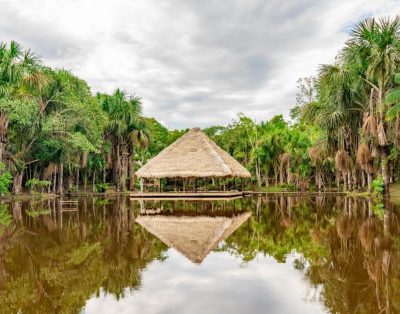
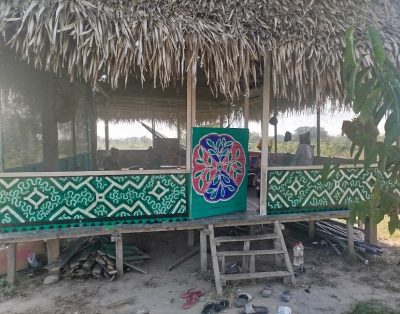
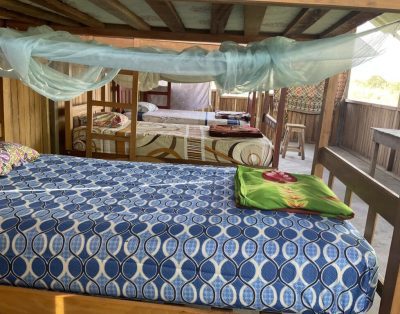
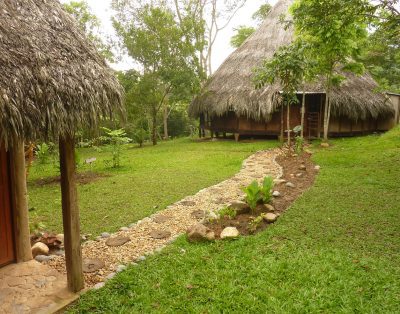
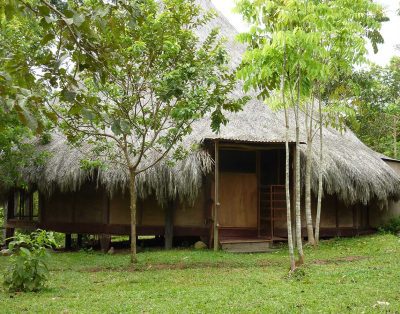
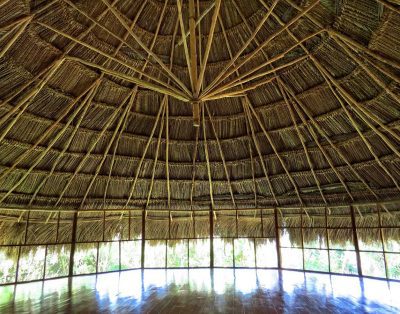
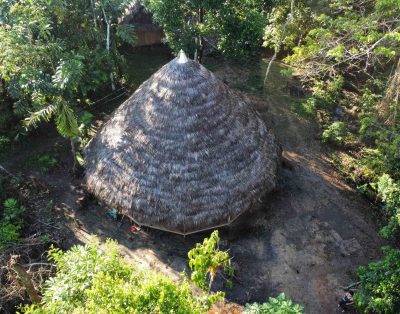
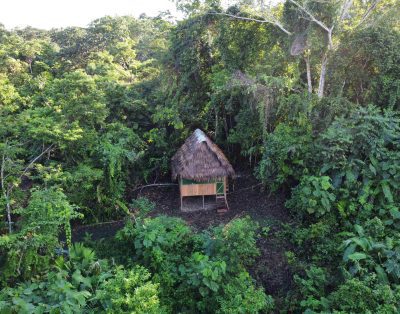
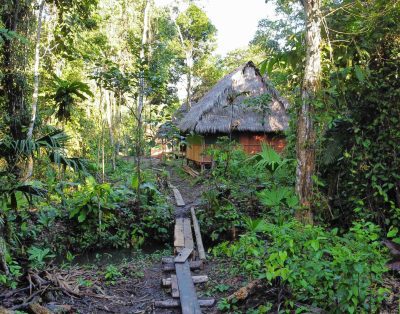
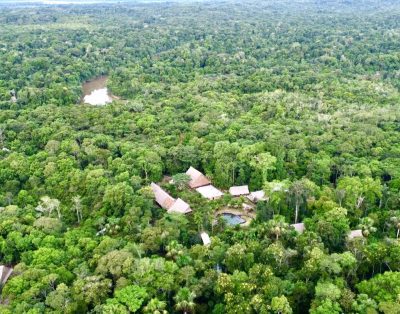
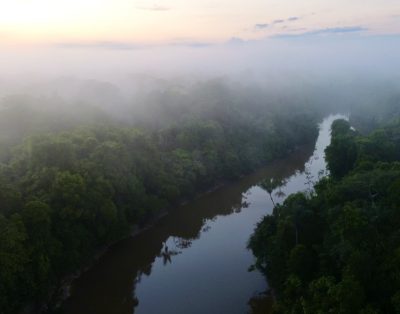
Amazon retreat venues in this region are typically lodges set within or adjacent to protected rainforest, accessible by boat along river tributaries. Electricity is often solar or generator-powered. Wi-Fi is limited or absent. The environment is wet, hot, and alive in ways that urban participants find genuinely disorienting at first — and then, almost always, deeply nourishing.
The Tambopata National Reserve and the Manu Biosphere Reserve — the latter considered one of the most biodiverse protected areas in the world — offer extraordinary wildlife context. Macaw clay licks, giant river otters, caiman, tapir, and hundreds of bird species create an immersive natural environment that functions as a retreat setting unlike anything available in temperate destinations.
This region suits groups focused on nature immersion retreats, ecological awareness, or deep rest and digital detox. It does not suit groups that need reliable connectivity, easy access to medical facilities, or air conditioning. These tradeoffs should be communicated clearly and early.
Iquitos — the largest city in the world inaccessible by road — sits in the northern Peruvian Amazon and serves a different retreat demographic. It is the historical heartland of ayahuasca ceremony within the mestizo curanderismotradition, and many of the practice’s most established lineages are rooted here.
Venues near Iquitos range from basic jungle camps to more developed retreat centers with medical staff on-site. The city itself is chaotic and fascinating, but most retreat programs keep participants at their jungle venue for the duration, with Iquitos serving only as arrival and departure logistics.
Lake Titicaca — the world’s highest navigable lake, shared between Peru and Bolivia — is one of those rare places that affects visitors almost immediately upon arrival. The altitude is serious: 3,812 meters. The light is piercingly clear. The Aymara and Quechua communities on the lake’s shores and islands maintain cultural traditions of remarkable continuity, including textile practices, agricultural techniques, and ceremonial calendars that predate the Inca empire.
Puno, the main Peruvian city on the lake, functions as a logistical base. The floating reed islands of the Uros people and the island of Taquile — famous for its UNESCO-recognized weaving tradition — are among the cultural experiences that retreat programs in this region can incorporate.
Retreat venues on or near the lake are fewer and more basic than those in the Sacred Valley. However, for programs focused on indigenous cultural immersion, community-based learning, or the specific psychological effects of high-altitude isolation over open water, Titicaca offers something genuinely irreplaceable.
Experienced retreat operators in Peru treat altitude acclimatization as a structured program component rather than a side note in pre-arrival communications. This means building one to two days of light programming at the beginning of the retreat — gentle movement, herbal teas (muña and coca leaf infusions are traditional and effective), hydration focus, and early sleep.
Coca leaf, it should be noted, is legal and culturally significant in Peru. Chewing it or drinking it as tea is not the same thing as consuming refined cocaine, a conflation that causes unnecessary anxiety among some international participants. A clear briefing helps.
Peruvian cuisine is extraordinary — rightly recognized as among the world’s finest. However, retreat catering in Peru requires attention to altitude’s effect on digestion. Rich, heavy meals are harder to process at elevation. The best retreat kitchens in the Sacred Valley have developed menus that are nourishing without being taxing — drawing on local grains like quinoa and kiwicha, root vegetables, and fresh highland produce.
Most international flights land in Lima, which means a layover of some kind is often unavoidable. Rather than treating Lima as a purely logistical inconvenience, a small number of retreat organizers have begun incorporating a night in the city as a genuine program element — visiting Larco Museum for its extraordinary pre-Columbian collection, or experiencing the coastal neighborhood of Barranco as an introduction to contemporary Peruvian culture. This framing converts dead transit time into meaningful context.