Reset Password

Retreat Venues Morocco

You’re drowning in browser tabs trying to find the perfect retreat venue Morocco has to offer.

Our platform includes dozens of venues there, and we’re about to save you weeks of research.

Price on Request
Guests:32
Extra Guests:12
10
12
$ 385 /night
Guests:13
Extra Guests:0
3
6
From $ 925 /night
Guests:16
Extra Guests:0
7
7
$ 920 /night
Guests:14
Extra Guests:6
6
6
$ 260 /night
Guests:9
Extra Guests:0

Morocco has quietly become one of the most sought-after destinations for group retreats in the world — and for good reason. Between the Atlas Mountains and the Atlantic coast, between ancient medinas and open desert, the country offers something that’s increasingly rare: genuine contrast. A retreat venue in Morocco doesn’t just give you a place to stay. It gives you a setting that does part of the work for you.

But choosing the right venue takes more than scrolling through beautiful photos. This guide is designed to help retreat organizers, yoga teachers, wellness coaches, and corporate teams make a smarter, more grounded decision.

Why Morocco Works So Well for Retreats

There’s a reason facilitators return here again and again. The country’s energy is naturally conducive to stepping back, slowing down, and recalibrating — whether your group is there for meditation, creative work, leadership development, or simply rest.

The Moroccan landscape shifts dramatically over short distances. Within a few hours, you can move from pine-forested mountains to sun-baked plateaus to coastal cliffs. This variety means retreat venues here are genuinely diverse, not just aesthetically but functionally — each setting tends to produce a different emotional register in participants.

Beyond geography, Moroccan hospitality (l’hospitalité marocaine) has a cultural depth that international hotels simply can’t replicate. Meals are shared slowly. Spaces are built for gathering. Many traditional riads and kasbahs were designed, centuries ago, as places of refuge and renewal. You’re not inventing that quality — you’re borrowing it.

The Main Retreat Regions: What Each One Offers

Marrakech and Its Surroundings

Marrakech remains the most accessible entry point. The city’s airport connects easily with most of Europe and increasingly with North America. Venues in and around the city range from boutique riads in the medina to large estate properties in the Palmeraie, the palm grove district just north of the center.

For retreat use, the Palmeraie tends to work better than the medina itself. The medina is vibrant and extraordinary, but it’s also loud, dense, and full of distraction. Groups that need focused programming often find that a more secluded venue — even just fifteen minutes outside the city — makes a significant difference to the quality of the experience.

Day trips into the medina, on the other hand, can be a powerful optional excursion. The contrast between retreat stillness and market bustle can be deeply illuminating for participants.

The Atlas Mountains

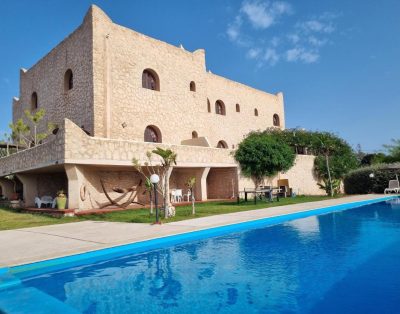
The Atlas Mountains offer something quite different: altitude, cold nights, clear air, and a slower pace of life that feels almost pre-industrial in parts. Venues here are typically smaller and more rustic. Many are built from local stone, with wood-burning fireplaces and terraces that look out over valleys and traditional Berber villages.

This region is particularly suited to wellness retreats, hiking-focused programs, or groups that want a genuine sense of disconnection. WiFi is limited in some locations — which is either a problem or a feature, depending on your intentions.

Journey times from Marrakech to the Atlas range from 45 minutes to several hours depending on how deep into the mountains you go. For groups arriving from international flights, this needs to be factored carefully into the program flow.

The South: Draa Valley and the Edge of the Sahara

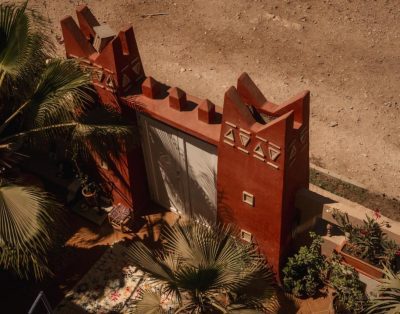
Few retreat experiences in the world compare to spending several nights at the edge of the Sahara. Desert venues in southern Morocco — particularly around Zagora, M’hamid, and the Draa Valley — tend to be lodges and camps built in traditional kasbah style, surrounded by dunes, palmeries, and absolute silence.

This setting is transformative precisely because it is extreme. Temperature swings between day and night are significant. Distances from airports are long. Infrastructure is basic. But for the right group, in the right program, that intensity is exactly the point. Silence, stars, and the physical scale of the landscape have a way of reordering priorities.

The Atlantic Coast

Coastal Morocco — particularly around Essaouira, Taghazout, and the Oualidia lagoon — offers a gentler alternative to the desert or the mountains. Sea breezes moderate the heat, surf culture adds a relaxed energy, and the light along this stretch of coastline is extraordinary.

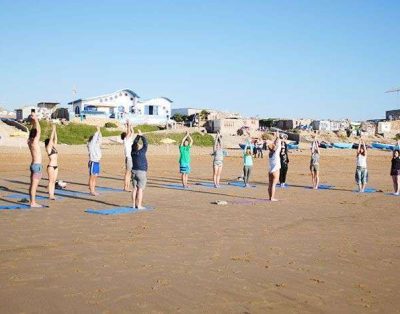
Surf retreats, yoga retreats focused on outdoor practice, and creative residencies are all particularly well-suited to the coast. Venues here range from boutique surf camps to converted farmhouses with sea views. The area around Taghazout, in particular, has seen significant development and now hosts several purpose-built retreat centers with serious programming infrastructure.

Key Criteria When Evaluating a Venue

Space and Flow

A well-designed retreat venue is mapped around movement — between sleep, practice, meals, and free time. Look carefully at how spaces connect. Is the yoga or meeting room far from the sleeping areas? Are meals served somewhere that encourages conversation, or in a dining room that feels transactional?

Outdoor space matters more than many organizers initially expect. Participants who can move freely between indoor and outdoor environments throughout the day tend to feel less confined, less restless. Morocco’s climate often allows outdoor use for most of the year, so venues that capitalize on this — with terraces, gardens, and shaded courtyards — are generally preferable.

Catering Capacity

Moroccan cuisine is among the most varied and nourishing in the world. But group catering at a retreat requires specific capabilities: the ability to handle dietary requirements, to pace meals correctly within a day’s program, and ideally to source locally.

Ask venues directly about their experience catering for groups with mixed dietary needs. Vegan and gluten-free accommodation has improved dramatically across Morocco in recent years, but it remains inconsistent. A venue with an in-house chef who is experienced in adapting traditional recipes is a significant advantage.

Connectivity and Logistics

Morocco has improved its infrastructure considerably, but some venues are still served by rough mountain roads or require transfers that are longer than they appear on a map. Before committing, it’s worth asking how transportation is managed — whether the venue arranges group transfers, what vehicle types are used, and whether the roads are manageable in all seasons.

Cell service and internet are adequate in cities and many rural areas, but they are genuinely unreliable in remote mountain and desert locations. This should be communicated to participants in advance, clearly and honestly.

What Makes a Morocco Retreat Venue Stand Out

Integration of Local Culture

The best venues are those where Moroccan culture isn’t just decorative. Look for properties where local artisans have been involved in the construction and furnishing, where regional produce drives the kitchen, and where the staff are from surrounding communities. This authenticity is felt by participants in a way that’s hard to manufacture.

Several venues now offer structured cultural programming alongside their facilities — visits to cooperatives, cooking workshops with local families, or sessions with Gnawa musicians. These integrations tend to be among the most memorable moments of a retreat, far outpacing the formal sessions.

Intentional Design

Retreat-specific design — spaces built or adapted with the explicit goal of hosting groups — makes a noticeable difference to facilitation. Rooms that can be easily rearranged, acoustics that work for group sessions, outdoor areas that are practical rather than merely picturesque, and sleeping arrangements that give participants real privacy without isolating them from the group dynamic.

Not every beautiful property is a functional retreat venue. The selection process should be led by practical criteria alongside aesthetic ones.

Timing Your Retreat in Morocco

Morocco’s climate is pleasantly predictable for much of the year. Spring (March to May) and autumn (September to November) are the most consistently comfortable periods across most regions. Summers are hot, particularly inland, though coastal venues remain viable. Winter brings cold nights in the mountains but clear, mild days across the south.

Ramadan is worth factoring into your planning. During this month, the rhythm of daily life shifts, some staff operate on modified schedules, and the atmosphere in public spaces changes. For groups arriving from outside Morocco, this can be a genuinely enriching cultural context — but it requires a venue experienced in hosting international retreats during this period.

A Final Word on Logistics

Planning a group retreat in Morocco is more achievable than many organizers assume. A growing number of venues have English and French-speaking teams with direct experience in international bookings, program coordination, and permit management. Several destination management companies specialize specifically in group retreats in Moroccoand can handle the complexity of transfers, activities, and supplier coordination.

The key is starting the conversation early. Morocco’s most reputable retreat venues — particularly in peak seasons — are booked months in advance. The earlier you establish contact, the more flexibility you’ll have in customizing the program, negotiating group rates, and securing the dates that work best for your participants.

Done well, a retreat in Morocco is an experience that participants carry with them for years. The country has a way of doing that.