Reset Password

Retreat Venues Guatemala

You’re drowning in browser tabs trying to find the perfect retreat venue Guatemala has to offer.

Our platform includes dozens of venues there, and we’re about to save you weeks of research.

Guatemala doesn’t ease you in slowly. The colors are saturated, the markets are loud, the volcanoes smoke. Even arriving at Guatemala City’s chaotic airport and driving through its traffic-choked streets feels like a kind of sensory recalibration. By the time most participants reach their retreat destination — lake, jungle, or highland village — they’ve already been shaken loose from their normal operating mode.

That quality of intensity is precisely what makes a retreat venue in Guatemala so effective for the right kind of group. This is not a destination for passive tourism dressed up as transformation. It demands engagement. And when a retreat is designed around that demand rather than against it, the results tend to be lasting.

Why Guatemala Is Having Its Moment

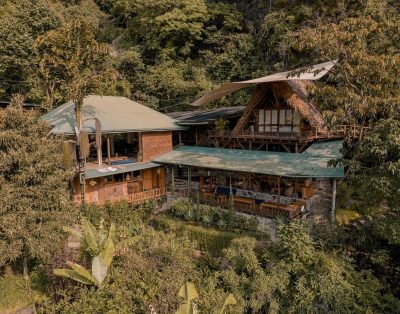
The country has always drawn a certain kind of traveler — one willing to trade comfort for depth. What’s shifted in recent years is the quality of retreat infrastructure available to that traveler. Purpose-built retreat centers, thoughtfully designed ecolodges, and a growing network of experienced local facilitators have together raised the standard considerably.

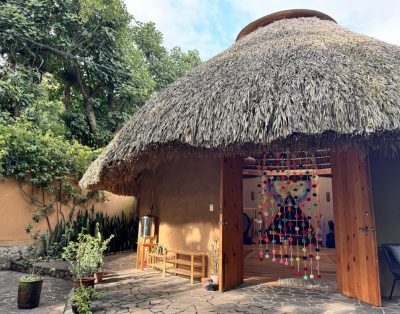
Guatemala’s wellness scene is also rooted in something real. Maya spiritual practices — including temascal(traditional sweat lodge), cacao ceremony, and fire ritual — are not imported here from a New Age catalog. They are practiced by indigenous communities who have maintained these traditions continuously, often through considerable historical adversity. When these elements are offered within a retreat context by practitioners with genuine lineage, the difference is immediately felt.

Additionally, the country’s relative affordability compared to other wellness destinations means that more of a retreat budget can be directed toward facilitation quality, local cultural experiences, and meaningful excursions — rather than absorbed by accommodation costs.

The Primary Retreat Regions and What Each Offers

Lake Atitlán: The Obvious Choice, For Good Reason

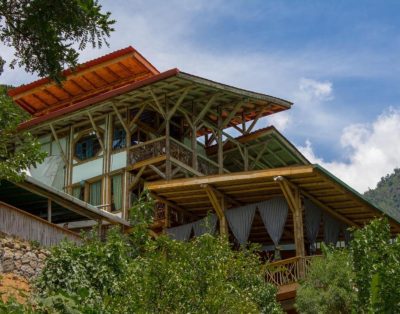
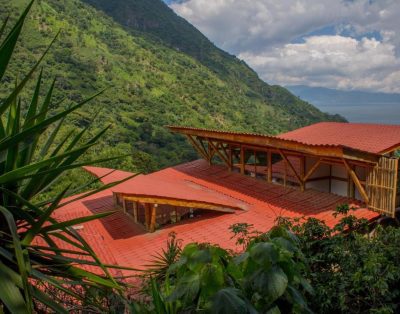
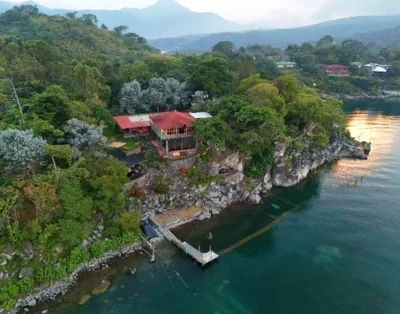
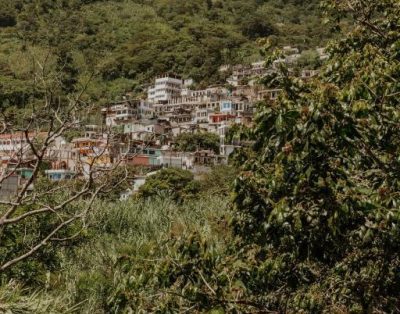
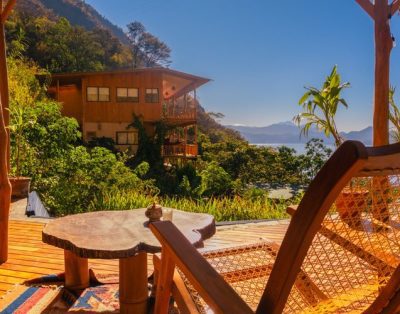
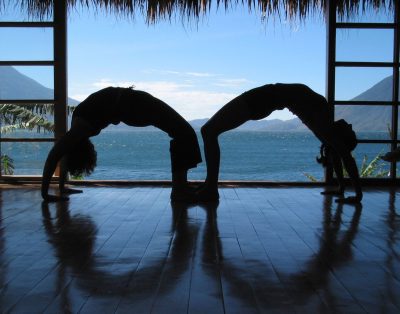
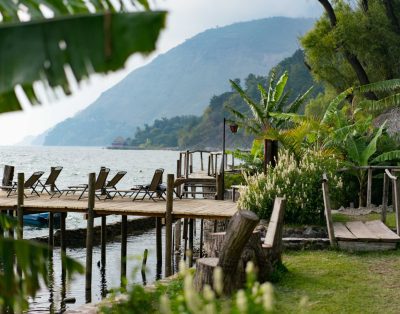
Lake Atitlán is the gravitational center of Guatemala’s retreat world, and its reputation is entirely earned. Ringed by three volcanoes and dotted with indigenous Tz’utujil and Kaqchikel Maya villages, the lake sits at roughly 1,560 meters above sea level. The altitude moderates what would otherwise be tropical heat, and the setting — particularly at dawn and dusk — produces a quality of light that many participants describe as unlike anywhere else they’ve been.

The lake’s north shore, particularly around San Marcos La Laguna, has the highest concentration of retreat venues, yoga centers, and holistic practitioners in the country. San Marcos has earned a somewhat alternative reputation over the years, which either appeals or doesn’t depending on group profile. What’s undeniable is the quality and variety of practitioners available there — energy healers, Ayurvedic therapists, breathwork facilitators, and Maya ceremonial guides all operate within walking distance of each other.

San Juan La Laguna, a few kilometers west, offers a quieter and more culturally grounded base. The village is known for its weaving cooperatives and natural dye workshops — experiences that integrate naturally into retreat programs focused on creativity, reconnection with craft, or women’s empowerment retreats. Venues here are smaller and less internationally oriented, which for many groups is an advantage.

On the eastern shore, Santa Catarina Palopó and San Antonio Palopó are less visited by the retreat circuit but offer extraordinary views and a more private experience. Several boutique properties have been developed here with serious design attention — places that manage to feel both distinctly Guatemalan and deeply comfortable.

One logistical reality worth naming: access to the lake is by boat (lancha) between villages. This is charming and atmospheric, but it adds complexity for groups with heavy luggage or mobility limitations. Transfer planning from Guatemala City — roughly a three-hour drive to the lake — deserves careful coordination, particularly for groups arriving on international flights.

The Western Highlands: Quetzaltenango and the Maya Heartland

Quetzaltenango (known locally as Xela) is Guatemala’s second city and functions as the gateway to the western highlands — a region of market towns, volcanic peaks, and dense Maya cultural life that is far less visited by international retreat groups than the lake.

This relative anonymity is part of its appeal. Venues near Xela are typically smaller, less polished, and more deeply embedded in local community life. For retreats focused on cultural immersion, language learning, or social justice themes, the western highlands offer a richness of context that more touristic areas cannot match.

The town of Chichicastenango hosts one of the largest and oldest indigenous markets in Central America, held every Thursday and Sunday. A retreat structured around market visits, conversations with weavers and artisans, and workshops on Maya cosmology would find its raw material here in abundance.

San Andrés Xecul, with its extraordinary baroque church painted in vivid yellow and turquoise, and the volcanic peaks of Santa María and Santiaguito — one of the world’s most active volcanoes — create a landscape of unrelenting visual intensity. It’s not a region for passive observation.

The Petén: Jungle, Ruins, and Deep Silence

The Petén jungle in Guatemala’s north is the country’s wildest retreat territory. It is also its most demanding. The lowland heat is heavy and unrelenting. Infrastructure is thin. Roads can become impassable in the wet season. But for groups willing to accept these conditions, the rewards are genuinely rare.

Tikal National Park, one of the great archaeological sites of the ancient Maya world, sits within dense jungle that is still home to spider monkeys, toucans, jaguars, and dozens of raptor species. Several retreat operators have developed programs based around Tikal — early morning temple visits before the tourist crowds arrive, guided jungle meditations, and astronomy sessions in the darkness of a park without light pollution.

Smaller, lesser-known sites — Yaxhá, El Mirador, Uaxactún — offer even more profound solitude for groups willing to travel further from paved roads. These are not day-trip destinations. They are multi-day immersions that require logistical commitment but deliver an encounter with ancient human achievement and living jungle that is effectively impossible to replicate elsewhere.

Maya Ceremony and Cultural Integrity: A Critical Distinction

Guatemala’s retreat market has grown quickly enough that quality has become inconsistent. Nowhere is this more apparent than in the offering of Maya ceremonial experiences.

Cacao ceremonies, temascal, and fire rituals are increasingly offered at retreat venues across the country — and across the world, often by practitioners with no meaningful connection to Maya tradition. In Guatemala, the real thing is available. The question is whether the venue you’re working with has genuine relationships with indigenous ceremonial leaders or is simply packaging aesthetics.

Legitimate practitioners are typically ajq’ij — Maya spiritual guides trained within a specific lineage and recognized by their community. They are not difficult to identify if you ask the right questions. A venue that connects its retreat programming with certified ajq’ij from local villages is offering something substantively different from one that has hired someone because they wear traditional dress and know how to brew ceremonial cacao.

This distinction matters ethically, practically, and experientially. Participants who encounter the real thing tend to know it. And increasingly, international groups are doing enough due diligence to ask before they book.

Practical Considerations Before You Commit

Safety and Logistics

Guatemala’s safety landscape varies significantly by region. Lake Atitlán, Antigua, and most established retreat corridors are considered safe for organized groups, particularly when movement is coordinated through a reliable local operator. Independent late-night movement in unfamiliar areas carries more risk, as in any developing country.

The best retreat venues maintain strong local networks — trusted drivers, relationships with regional healthcare providers, and clear emergency protocols. Before booking, it’s reasonable to ask how a venue handles medical incidents and what their evacuation procedure looks like. A venue with nothing prepared for these eventualities is a venue that hasn’t taken the safety of its guests seriously.

Antigua as a Base or Transit Point

Antigua Guatemala — the colonial city designated as a UNESCO World Heritage Site — functions as the country’s most practical retreat staging ground. Its cobblestone streets, baroque churches, and sophisticated restaurant scene offer an acclimatization experience that helps international groups transition gradually into Guatemalan life before heading to more remote venues.

Several retreat operators use Antigua as a program opening or closing destination. It’s also where many Spanish-language schools are based, making it a natural complement to retreats with a language-learning component.

When to Go

Guatemala’s climate is governed by a single wet season, roughly May through October, and a dry season from November through April. The dry season is the conventional peak for retreat travel — conditions are predictable, roads are reliable, and outdoor programming flows easily.

That said, the wet season has its advocates. The highland landscape turns extraordinarily green. Waterfalls run full. The Petén jungle is at its most alive. Fewer tourists mean quieter sites and more attentive service at most venues. Groups that can manage occasional afternoon rain tend to find the experience unexpectedly rewarding.