Reset Password

Retreat Venues Bali

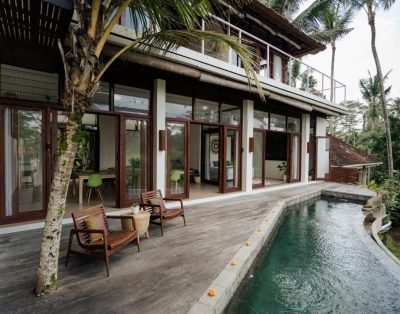
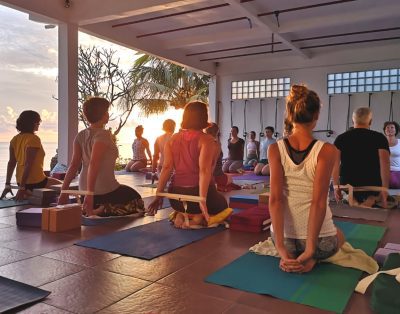
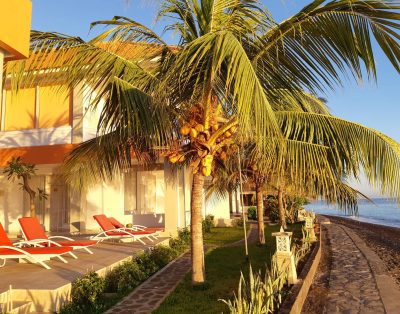
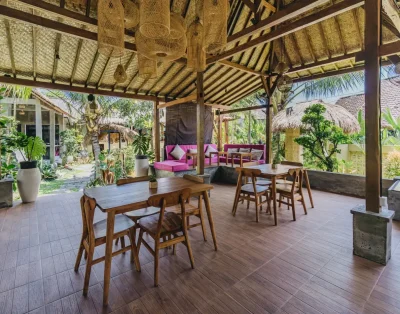
You’re drowning in browser tabs trying to find the perfect retreat venue Bali has to offer.

Our platform includes dozens of venues there, and we’re about to save you weeks of research.

Price on Request
Price on Request
Guests:18
Extra Guests:0
9
9
Price on Request
Price on Request
Guests:8
Extra Guests:0
3
4
Price on Request
Price on Request
Price on Request
$ 55 per person /night
Guests:45
Extra Guests:0
19
19
$ 1,298 /night
Guests:20
Extra Guests:0
20
19

Everyone knows about Bali. That’s both its greatest asset and its most significant challenge. The island has been written about so extensively, photographed so exhaustively, and marketed so aggressively that arriving with fresh eyes requires a conscious act of will. For retreat organizers, the task is similar: cutting through the mythology to find venues and structures that deliver a genuine experience rather than a well-staged one.

The good news is that behind the Instagram backdrop, Bali retreat venues of real substance do exist — places where the depth of Balinese spiritual culture, the quality of the natural environment, and the sophistication of local wellness practitioners combine to produce something that justifies the island’s reputation many times over.

What Bali Actually Does Well

Before getting into regions and logistics, it’s worth being honest about why Bali works — specifically, not generically.

The island’s Hindu-Balinese spiritual tradition is not a tourist attraction. It is a living daily practice. Offerings (canang sari) are placed at doorsteps, temple gates, and road junctions every morning. Ceremonies and processions interrupt traffic and commerce throughout the year without apology. The sacred and the mundane are not separated here in the way most Western participants are accustomed to.

That interpenetration of spiritual practice into ordinary life creates an ambient quality that affects retreat participants whether or not the program directly addresses it. People slow down. They become more observant. Something shifts in the background that supports whatever foreground work the retreat is doing.

Bali also has a deep healing practitioner culture. Balinese balian — traditional healers working with herbal medicine, energy, and ancestral guidance — have been practicing for generations. Alongside them, an international community of yoga teachers, somatic therapists, breathwork facilitators, and Ayurvedic practitioners has established itself over decades. The density of serious wellness expertise per square kilometer is genuinely unusual.

The Regions: Honest Assessments

Ubud: Still the Centre, But Choose Carefully

Ubud remains the spiritual and cultural heart of Bali’s retreat world. It sits in the island’s interior, surrounded by rice terraces, river gorges, and temple complexes. The altitude is modest but enough to take the edge off coastal heat. The Campuhan ridge, the Monkey Forest, and the Sacred Monkey Forest Sanctuary give the town a natural frame that hasn’t been entirely consumed by development — though development has certainly tried.

The honest assessment of Ubud is this: the town itself has become very busy. The main streets are thick with traffic, tour groups, and an infrastructure of restaurants, shops, and spas built primarily around short-stay tourism. A retreat venue located on Ubud’s main road is not, in practice, a retreat at all.

However, the Ubud surroundings — the villages of Penestanan, Sayan, Kedewatan, and Tegallalang — offer genuine seclusion within fifteen to thirty minutes of the town’s cultural resources. Venues in these areas can be set on river valley edges, among terraced fields, or within traditional village compounds. The contrast between the setting and the town’s commercial center is significant.

For retreat organizers, the strategy is to use Ubud as a cultural resource while basing the group outside it. The best yoga retreats in Ubud are rarely in Ubud proper.

Canggu and the Southwest Coast: Know What You’re Getting

Canggu has undergone a transformation so rapid and comprehensive that it barely resembles the quiet fishing village it was a decade ago. It is now one of Southeast Asia’s most concentrated zones of digital nomad culture, surf lifestyle, and vegan café aesthetics. That’s not a criticism — it’s a description. For the right group profile, Canggu works very well.

Surf retreats, creative residencies, and programs targeting younger professional demographics tend to land well in this area. The surf at Echo Beach and Batu Bolong is genuinely excellent. The food scene — diverse, plant-forward, and consistently high quality — supports retreat catering without much difficulty. The energy is social and outward-facing.

What Canggu doesn’t offer is stillness. Groups that need genuine psychological quiet, deep introspection, or a break from the visual intensity of modern consumer culture will find the area counterproductive. The streets are loud, the nightlife is present, and the general atmosphere is one of stimulation rather than withdrawal.

Further south, Seminyak and Kerobokan occupy a similar register — slightly more upmarket, equally busy. Both are better suited to program openings or closings — a night or two before dispersal — than as primary retreat bases.

Sidemen and East Bali: The Road Less Taken

East of Ubud, the landscape changes character markedly. The valleys deepen, the villages become quieter, and the tourist infrastructure thins considerably. Sidemen — a long valley running toward the slopes of Gunung Agung, Bali’s sacred and still-active volcano — is one of the island’s most beautiful and least crowded retreat territories.

Venues here are typically smaller and more personal. Many are family-run properties with extraordinary views of terraced rice fields and jungle-covered hillsides. Gunung Agung, considered by Balinese Hindus to be the seat of the gods, provides a backdrop of genuine spiritual weight. Its presence is felt differently than the dramatic but more touristic landscapes of central Ubud.

The distance from Denpasar airport — roughly two to two and a half hours depending on traffic — is a logistical consideration. But for groups committed to genuine immersion rather than convenient access, east Bali retreat venuesconsistently deliver an experience that feels less manufactured than their western counterparts.

The North and Northwest: For the Genuinely Adventurous

Munduk in the northern highlands and the lakeside village of Bedugul offer a cooler, mist-wrapped alternative to the tropical lowlands. Coffee plantations, clove trees, waterfalls, and twin crater lakes define the landscape here. Temperatures drop noticeably. The pace slows in ways that even experienced retreat participants find surprising.

Venues in the north are genuinely rare. The infrastructure is thinner, the tourist economy much smaller. However, several lodges and eco-properties have established themselves with serious retreat programming — particularly for groups focused on nature immersion, silent retreats, or ecological awareness work.

The north coast around Lovina offers a different dynamic: black sand beaches, dolphin watching at dawn, and a seafront that feels genuinely local in a way that southern Bali’s coast no longer does.

The Ceremony Question: What’s Real, What’s Staged

One of the most common elements in Bali retreat packages is the inclusion of a Balinese ceremony or blessing. These range from deeply authentic to transparently performative, and the gap between them is wider than most promotional materials suggest.

Authentic Balinese ceremony is conducted by a pemangku (temple priest) or pedanda (high priest) within a genuine ritual context — ideally at a temple with real community significance, or within a family compound where the ceremony has actual meaning for those hosting it. These experiences are available. They require respectful advance arrangement, appropriate dress, and a willingness to participate rather than observe.

What is more commonly offered is a staged blessing ceremony designed for tourist consumption — aesthetically similar but spiritually empty. Participants who have experienced both tend to know the difference immediately.

Retreat organizers should ask venues specifically how their ceremonial offerings are arranged and who conducts them. A venue with genuine long-term relationships in the local community will have clear and confident answers.

Practical Considerations That Actually Matter

The Traffic Problem

Bali’s traffic is one of the island’s most underreported logistical challenges for retreat groups. The road network has not kept pace with the explosion of visitors and residents, and certain corridors — particularly between the airport, Seminyak, Canggu, and Ubud — are routinely gridlocked during peak hours.

A transfer that appears to take forty-five minutes on a map can take three hours on a Friday afternoon. This has real implications for retreat scheduling — particularly when participants are arriving on different flights and need to reach a venue before an opening session.

Experienced operators plan around this by arranging early-morning or late-evening transfers where possible, by using local drivers with deep route knowledge, and by building buffer time into arrival day schedules.

Noise and Neighborhood

Bali’s noise environment is something that retreat organizers rarely investigate until it’s too late. Venues that appear perfectly serene in photographs can be adjacent to a family temple that uses amplified sound for ceremonies at three in the morning, a rooster population of considerable enthusiasm, or a construction site that begins work at six.

None of these are complaints, exactly — they are Bali. But they need to be known before rather than after booking. Visiting a venue in person, or working with someone who has, is the only reliable way to understand what participants will actually hear at night.

The Dry Season Advantage

Bali’s dry season runs from approximately April through October. This is the conventional peak for retreat travel and for good practical reasons: outdoor sessions are predictable, temple processions are frequent, and the rice terraces cycle through their most photogenic stages. The flip side is that availability at sought-after venues fills up months in advance, and rates reflect the demand.

The wet season (November to March) brings afternoon rain, occasional flooding on low-lying roads, and a lushness that has its own appeal. For groups that can structure outdoor time around morning sessions, the wet season offers better availability, lower rates, and a version of Bali that feels noticeably less crowded.